Shorelines to Showfloor: Sustainability at POSSIBLE
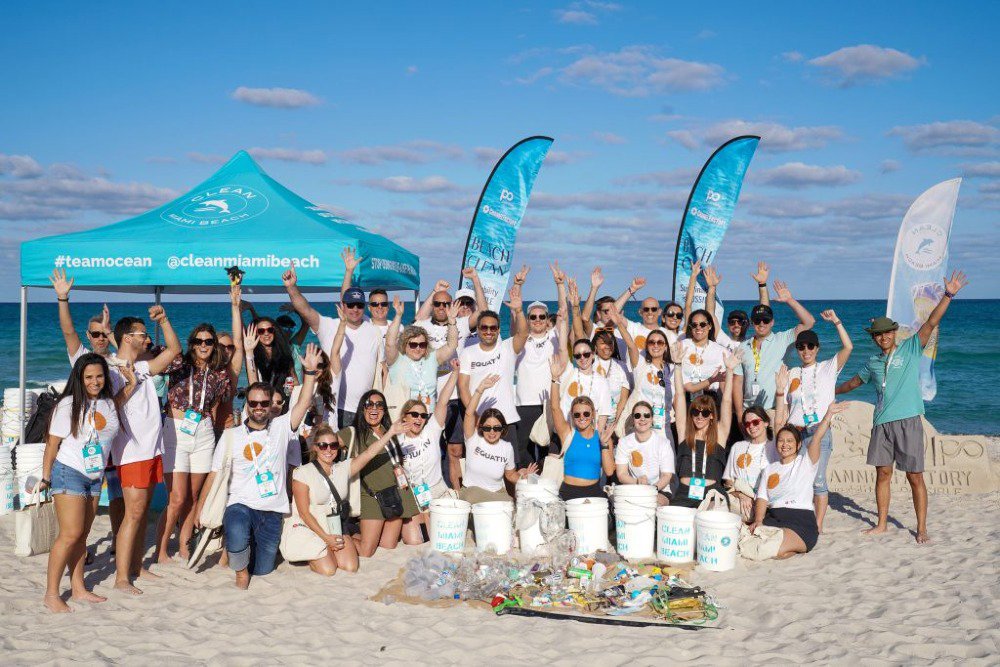
At POSSIBLE, sustainability shows up in a number of practical ways across the event. Over the past three years, the team has worked with Clean Miami Beach to organise beach clean-ups, bringing together more than 100 volunteers to remove nearly 150 pounds of litter and ocean debris. Surplus food from the event is collected and redistributed to local communities, with over 500 servings donated in 2025 alone. Inside the venue, hydration stations have also played a key role in reducing single-use plastic, eliminating over 4,000 plastic bottles each year.
These initiatives sit alongside more considered choices throughout the event. Attendee badges are made from biodegradable materials and produced locally, lanyards are created using recycled materials, and staff T-shirts are made from sustainably grown US cotton. Even the smaller details, from bamboo fans to wheat fibre sunglasses, are designed with a lower environmental impact in mind. Delivered in partnership with a venue focused on energy, water and waste reduction, the overall approach is simple: from large-scale initiatives to smaller details, every action contributes to a more sustainable way of delivering events.
The future at your feet: CWIEME Berlin
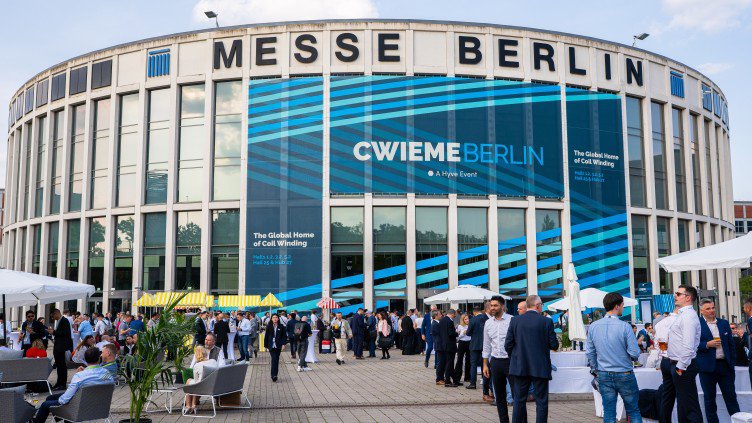
At CWIEME Berlin, sustainability is being built into the foundations of the event. As part of our approach at Hyve, we work closely with venues to drive meaningful change, and from 2026, Messe Berlin is now powered by 100% renewable electricity across all on-site energy use. It’s the result of a long-term transition, and a clear example of how the right partnerships can help set the standard for more sustainable events.
Alongside this, the team has introduced over 12,000 sqm of fully recyclable Rewind carpet across the show floor. Designed specifically for the events industry, the carpet is 100% recyclable and produced using significantly less energy and no water, helping to reduce waste from one of the most resource-intensive elements of event builds. While this has been a long-term ambition, it’s taken collaboration and persistence from the Ops team to make it commercially viable — marking a significant step forward in how the event is delivered and joining a number of other Hyve events in using this material.
Refill and repeat: Shoptalk Spring and Groceryshop
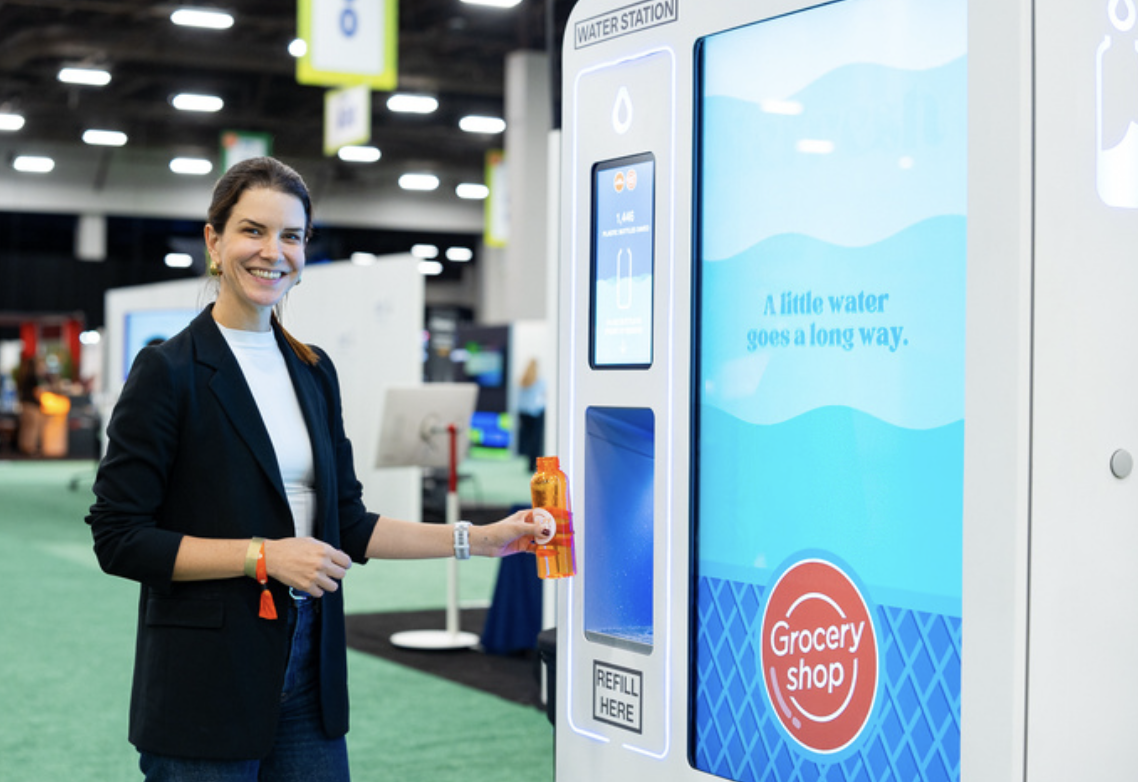
Hydration stations are a simple idea, but across Shoptalk and Groceryshop, they’re delivering real impact at scale. Placed in key locations across the show floor, they’ve become natural stop-off points for attendees, helping to support both the event experience and more sustainable behaviour.
At Shoptalk Spring, six hydration stations were installed across the event, serving more than 10,000 attendees. Over the course of the three days, more than 3,600 refills were recorded, saving 33.4 gallons of plastic and diverting 299kg of CO₂. The stations quickly became part of the flow of the event, showing how easy it is to shift behaviour when the right infrastructure is in place.
At Groceryshop, four hydration stations delivered a similarly strong result. Across the event, more than 1,900 refills were recorded, saving 17.9kg of plastic and diverting 160kg of CO₂. The impact of the hydration stations shows how small, practical changes can scale quickly and make a measurable difference.
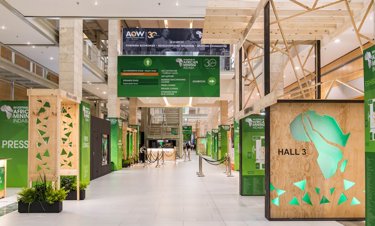
Sustainable sustainability at Mining Indaba
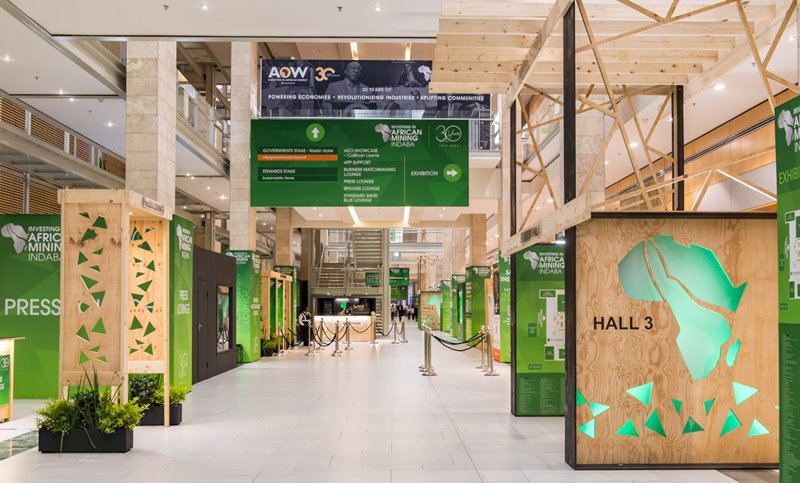
With ten content stages, the simplest option would be to build brand-new sets each year — using fresh raw materials and disposing of them afterwards. Instead, the team is committed to a circular approach that focuses on reducing waste, reusing existing material, and recycling wherever possible. By simplifying stage structures or using creative lighting solutions, the ops team has significantly minimised the volume of new materials required.
2023: The main stage was built entirely from sustainably sourced South African pine, setting a new standard for eco-conscious event design.
2024: The size of the main stage was reduced and the team re-purposed the left-over materials to create two additional stages.
2025: Key components from the 2023 stage continued to feature across multiple content stages. In partnership with AV supplier, IVTM, the team also began storing all stage elements for future reuse — further limiting environmental impact.
2026: Existing materials remain central to the stage-building strategy. This year’s stages — named after iconic African geographical locations — incorporated reused elements alongside increased use of fabric to add visual detail. All fabric was recycled after the event and will go on to form the inner lining of the 2027 delegate bags.
Each year, these designs showcase how thoughtful planning can drive environmental impact without compromising quality or experience.
Small steps, real progress
Step by step at Fintech
The Fintech team is rolling out projects from recyclable cutlery to digital signage, while partnering with the venue on a sustainability report to better understand and improve impact.
Turning the tide
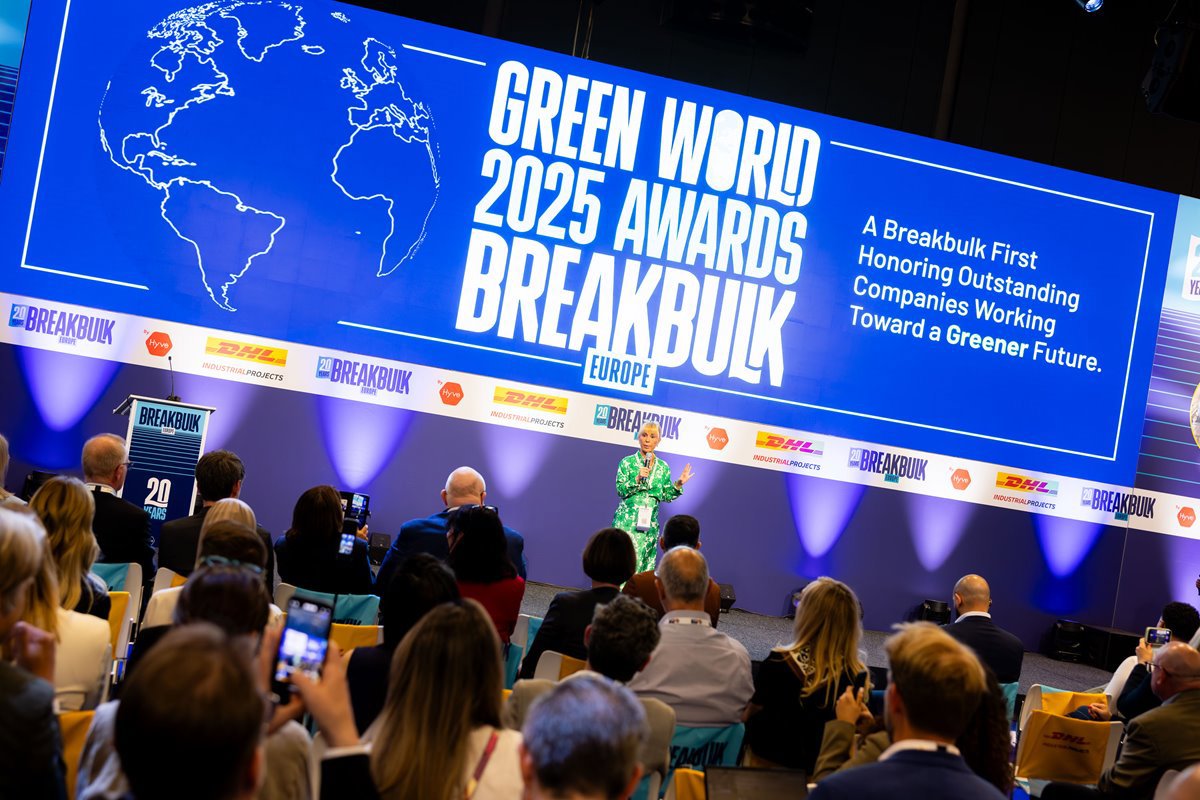
The Breakbulk Green World Awards will be making sustainability a focus this June by celebrating the companies and innovators driving more sustainable solutions in a traditionally heavy-impact industry.
Sharing stages: Shoptalk to Fintech
The main stage was used at both Shoptalk Spring and Fintech - a good example of how events can join up on sustainable efforts!
Watt a lift
Bett is switching to electric forklifts, cutting onsite emissions behind the scenes while keeping the show floor moving.
These are just some of the ways our events are taking steps to reduce their environmental impact. There’s more to do, but we’re moving in the right direction.