
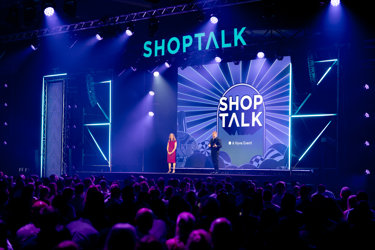
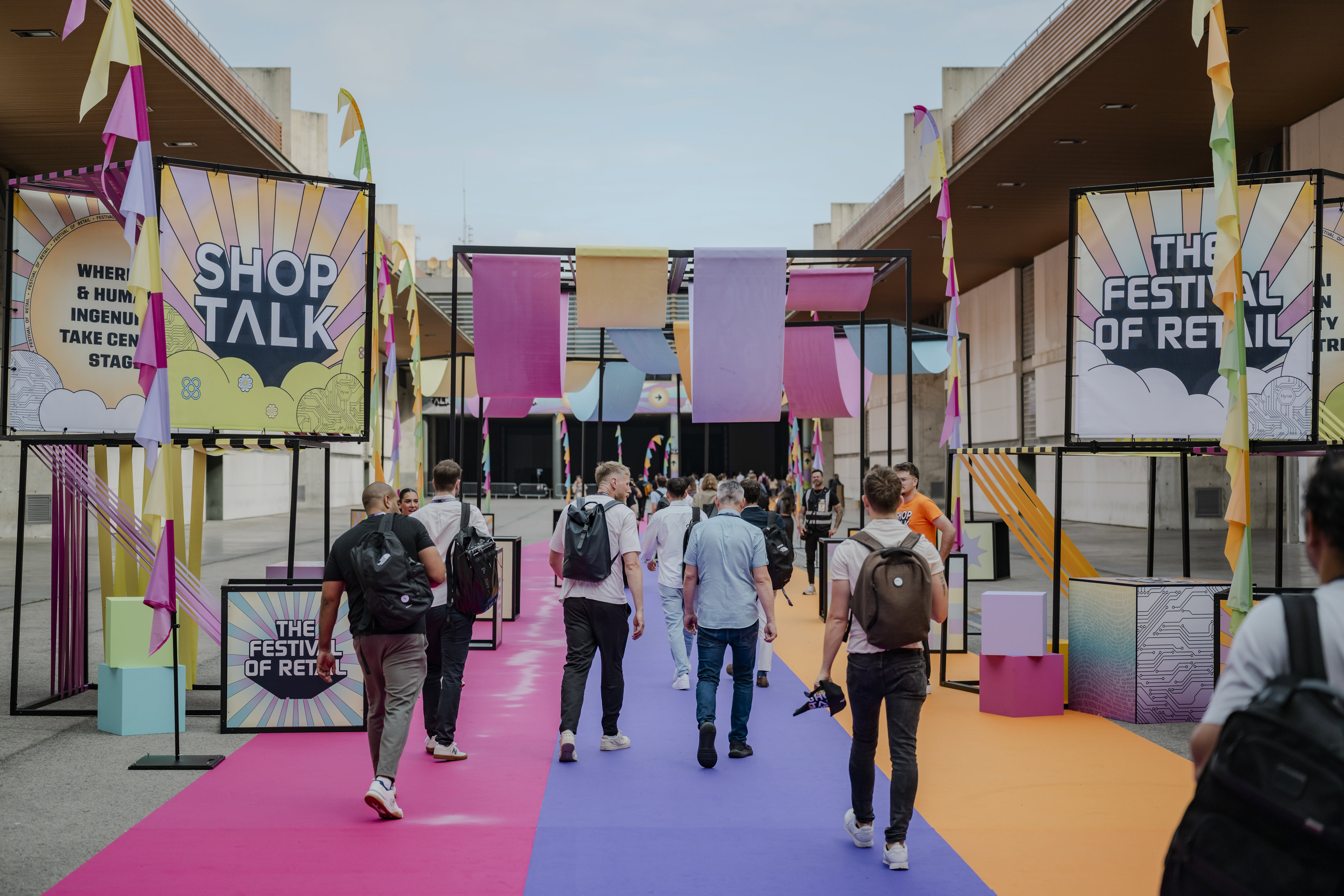
Shoptalk Europe 2026, the leading event for the European retail ecosystem, concluded a three-day run in Barcelona this week.
Bringing together more than 4,500 senior retail and technology leaders, brands, service providers, investors and startups to shape the future of commerce, insights were shared across stages to unlock retail’s potential, and more than 25,000 co-matched business meetings were conducted through Shoptalk’s 'Meetup' programme.
With the rise of artificial intelligence, shifting consumer priorities and the macro forces reshaping European commerce all on the agenda, Shoptalk Europe 2026 sent a clear message: the industry is in a period of fundamental transformation, and the brands that will win are focused on executing with technological and cultural precision, while embracing flexibility, enhanced personalisation and the agility required to operate and trial new innovations in the unknown.
Three themes emerged as the defining threads of the conversation: the growing gap between AI adoption and measurable business impact; the structural pressures, including a deepening consumer trust deficit, bearing down on European retailers; and the rise of discovery-led commerce in lieu of search-first.
 Agentic commerce has become the defining phrase of Shoptalk Europe, used to describe everything from assisted to fully delegated shopping experiences.
What's equally clear is that the European retail community expects technology to deliver real business impact while keeping people firmly at the centre - and while fully delegated shopping is still around the corner, the role of the human, from colleague empowerment to genuine consumer engagement, is where the industry is planting its flag.
Agentic commerce has become the defining phrase of Shoptalk Europe, used to describe everything from assisted to fully delegated shopping experiences.
What's equally clear is that the European retail community expects technology to deliver real business impact while keeping people firmly at the centre - and while fully delegated shopping is still around the corner, the role of the human, from colleague empowerment to genuine consumer engagement, is where the industry is planting its flag.AI & technology: From ambition to execution
AI in retail dominated conversations, with particular focus on the gap between adoption and execution or impact. Leading the talk on how the retailer is navigating Europe’s macro shifts, David Schröder, Co-CEO, Zalando said the company’s AI assistant grew from 6 million users in 2025, to 10 million users in Q1 2026 alone, with 90% of site content now AI-generated, up from near-zero a year ago.
Yet, despite widespread adoption, tangible business outcomes remain elusive for many. During a session on navigating rapid AI adoption, Chief Strategy Officer at Merkle, Holden Bale shared that they surveyed 100 different enterprises worth over a billion dollars at the end of last year and found that while 88% of enterprises have implemented AI in some form, only 6% can draw a direct line to EBITDA value. “That is an enormous gulf,” Bale said.
Panellists across the AI track converged on several principles for closing the adoption to impact gap – of note, these hinged on the understanding that data must be treated as a product with clear ownership, governance, and service level agreements because AI creates a flywheel effect wherein better data powers better models, which in turn generate richer data.
Consumer & market shifts: A continent under pressure
Ipsos painted a sobering macro picture for European retail sharing that consumer confidence has dropped 2.7 points, representing the second largest fall since the early days of COVID-19.
Against this backdrop, a persistent AI trust deficit is complicating retailers’ digital strategies, with only 35% of European consumers trusting companies to use their data with AI, compared to 48% globally. Yet demand signals remain complex – shopping frequency has risen consecutively for four years even as prices increase, with NIQ sharing that Aldi and Lidl have doubled their combined UK market share to 20% in the last decade.
Mark Elkins, General Manager, Global Ecommerce L'Oreal articulated the commercial stakes of getting trust right stating that in a world where discovery, consideration, purchase and fulfilment can all happen through agents, trust becomes a retailer’s last and most durable asset. Nadine Graf, President, Europe, UK&I & Emerging Markets, The Estée Lauder Companies echoed this sentiment, adding that trust, whilst built through generations, must be created “again and again”.
Retail media & stores: The decline of search-first shopping
One of the sharpest trends discussed across the three days was the rapid dismantling of the search-first purchase model. Shopper behaviour is shifting, with Pinterest saying 69% of Gen Z find visual search results more helpful than text when making a purchase. The brands and retailers that win will be those that show up in these key moments of engagement.
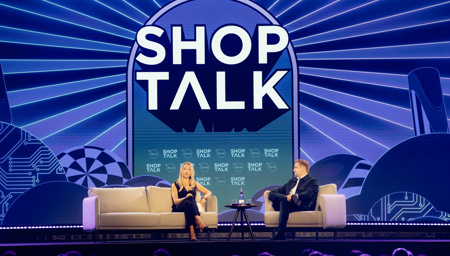
TikTok Shop recently announced its further expansion into Austria, Belgium, the Netherlands, and Poland, embodying precisely this approach. Rather than a search-first transaction, TikTok Shop places products inside shoppable videos and interactive livestreams, turning entertainment into a seamless path to purchase. Since launching in the EU in late 2024 and early 2025, over 100,000 European businesses have joined the platform, with daily Gross Merchandise Value delivering triple-digit growth between August 2025 and February 2026 - a trajectory that underlines just how quickly the discovery model is reshaping how European consumers buy.
But wider conversations at Shoptalk Europe made clear that discovery is not a single channel. Instead it is a binary, AI-mediated digital discovery and experience-led journey. Speaking on the former, Rik Strubel, Chief Marketing Officer at Douglas Group captured this starkly, highlighting that with the rise in adoption of AI assistants, consumers have a deeper product knowledge base than ever before and as such seek “validation” in purchase decisions, over and above the discovery they have already completed.
The overarching tension is who owns discovery in the AI era. While retailers currently hold a trust advantage over AI, that window is narrowing. As Mondelēz International, VP of Global Digital Commerce, Andrew Lederman put it, "wherever the discovery experience goes is where the dollars will go."
Announcements at Shoptalk Europe 2026
- Kaufland-Kaufland Global Marketplace is coming to Spain and Netherlands as announced live on the Shoptalk Europe stage by its CTO Fabian Kothe. Launching in late summer, the platform will offer 9 marketplaces across 9 different countries with just one registration, giving sellers the opportunity to potentially reach 220 million online shoppers.
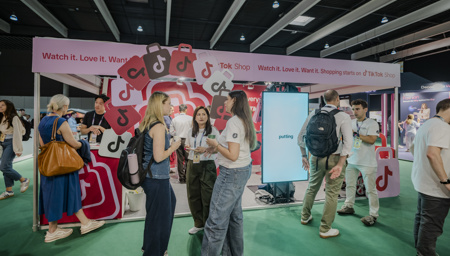
- TikTok Shop-From 15 June 2026, TikTok Shop will be available to shoppers and retailers in Austria, Belgium, the Netherlands, and Poland, joining existing markets in France, Germany, Ireland, Italy, Spain, and the UK. Bianca Sing, Head of Global Partnerships at TikTok Shop shared actionable learnings with retail leaders on how to use this scale, alongside LIVE Shopping and creators, to turn engaged communities into direct sales.
- KraftHeinz-Karen Owen, Chief Growth Officer for Kraft Heinz, Europe & Pacific Developed Markets unveiled an unexpected partnership between Heinz and Heineken - a limited edition six-pack containing five Heineken beers and one bottle of Heinz tomato ketchup.
- Bambuser–Bambuser released Shopper Behavior: Video & AI Report 2026, a study of 1,000 UK and US consumers which revealed that 1 in 5 US shoppers use AI to find products, while 74% of UK Gen Z believe AI will fully recreate the social experience of physical shopping. Click here for the full report.
Startups to watch
Maeve AI and Reclaim picked up the awards at the Startup Pitch session which showcases how innovative technologies are addressing retail’s biggest challenges, whilst simultaneously unlocking new growth opportunities.
- Maeve AI–An AI assistant tackling fashion returns at the production level, rather than on the product page, informed by the evidence that poor fit accounts for 70% of women’s wear returns as a result of fit metrics being generated by 400+ garment technologists with no standardisation.
- Reclaim–A sustainability and circularity fashion platform leveraging artificial intelligence to connect customers to resale, repair or recycling services– turning every product into a connected asset.
Watch more Shoptalk Europe 2026 Show Highlights here.